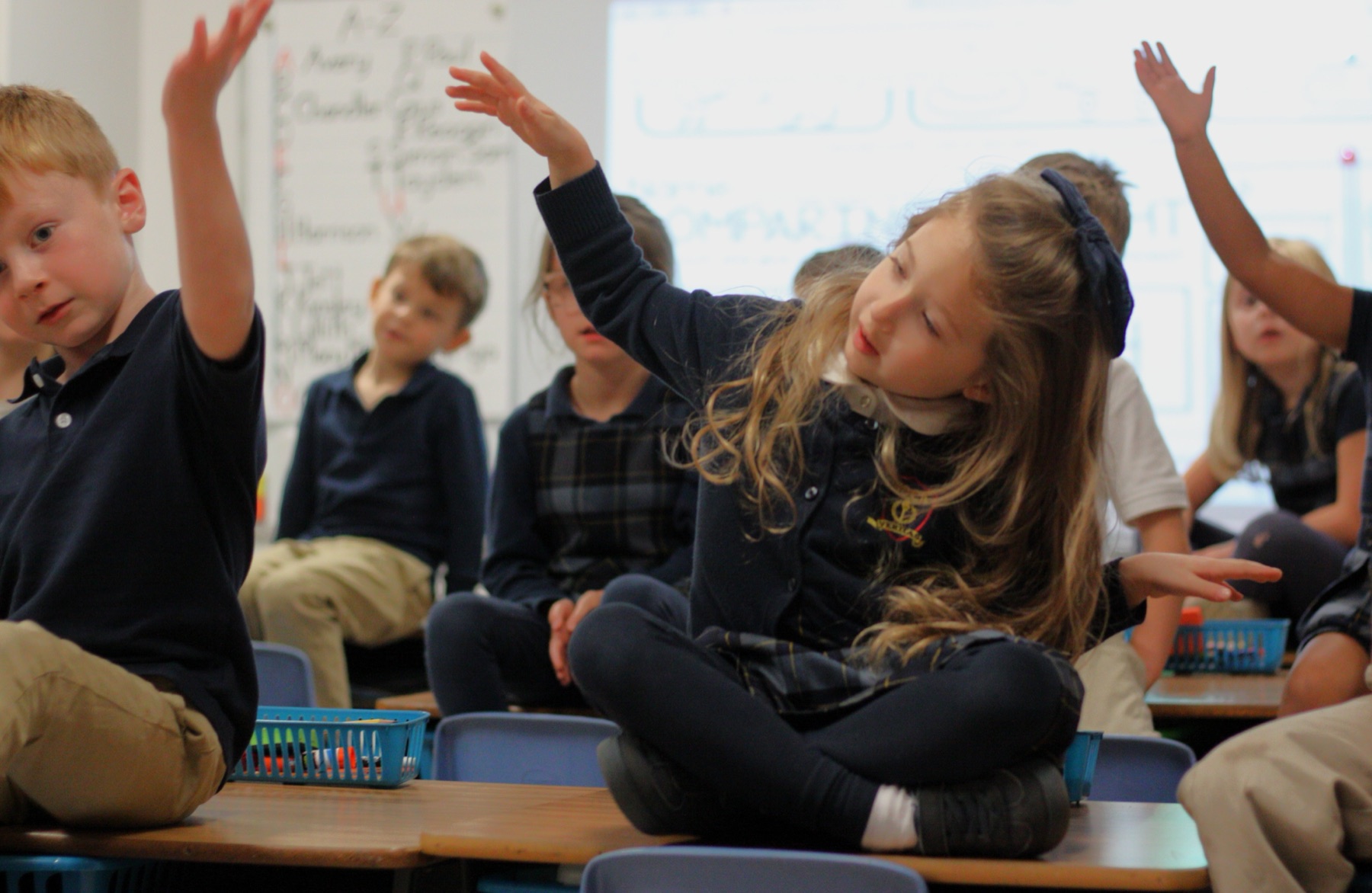
A morning of still hands.
Your kindergartener learns to sit upright, open a book, and listen. Small habits, practiced daily, that they will keep for life.

Lower School · Kindergarten – Grade 6
The Lower School at NOCA is quiet, ordered, and a little old-fashioned on purpose. Children in our K–6 classrooms read real books, write with real pencils, memorize poems, and learn to listen. They fall in love with a good story — and they build the habits that carry them the rest of the way.
Why the early years matter here
In the Lower School, we care less about how fast a child is moving and more about how well they have learned what is in front of them. We teach phonics until decoding is automatic. We teach math until the facts are cold. We teach them to sit, to listen, to answer in a full sentence, and to help the child next to them.
Parents who come from larger, louder schools often notice the tone first. Our classrooms are calm. Our hallways are calm. There is a warmth here that comes from expectations being clear and the day being ordered.
A rhythm, not a schedule
Your kindergartener learns to sit upright, open a book, and listen. Small habits, practiced daily, that they will keep for life.
By second grade, your child has memorized a poem and said it aloud to a room of classmates. The first time is nervous. By the tenth, they're proud.
Lower School students have physical education and recess as a fixed part of the day — gym time, outdoor play, tag, Red Rover. The body learns at the same time the mind does, and a child who has moved is a child who can sit still.
Your child's work goes home on paper. You can read it, save it, put it on the refrigerator. The writing improves because it's seen.
A picture of childhood
Winslow Homer painted this line of schoolchildren outside a one-room schoolhouse in 1872. A hundred and fifty years later, it is still one of the truest pictures of what childhood at a serious school actually looks like — small, concrete, physical, joyful.
Snap the Whip · Winslow Homer · 1872 · Butler Institute of American Art
Some things don't change
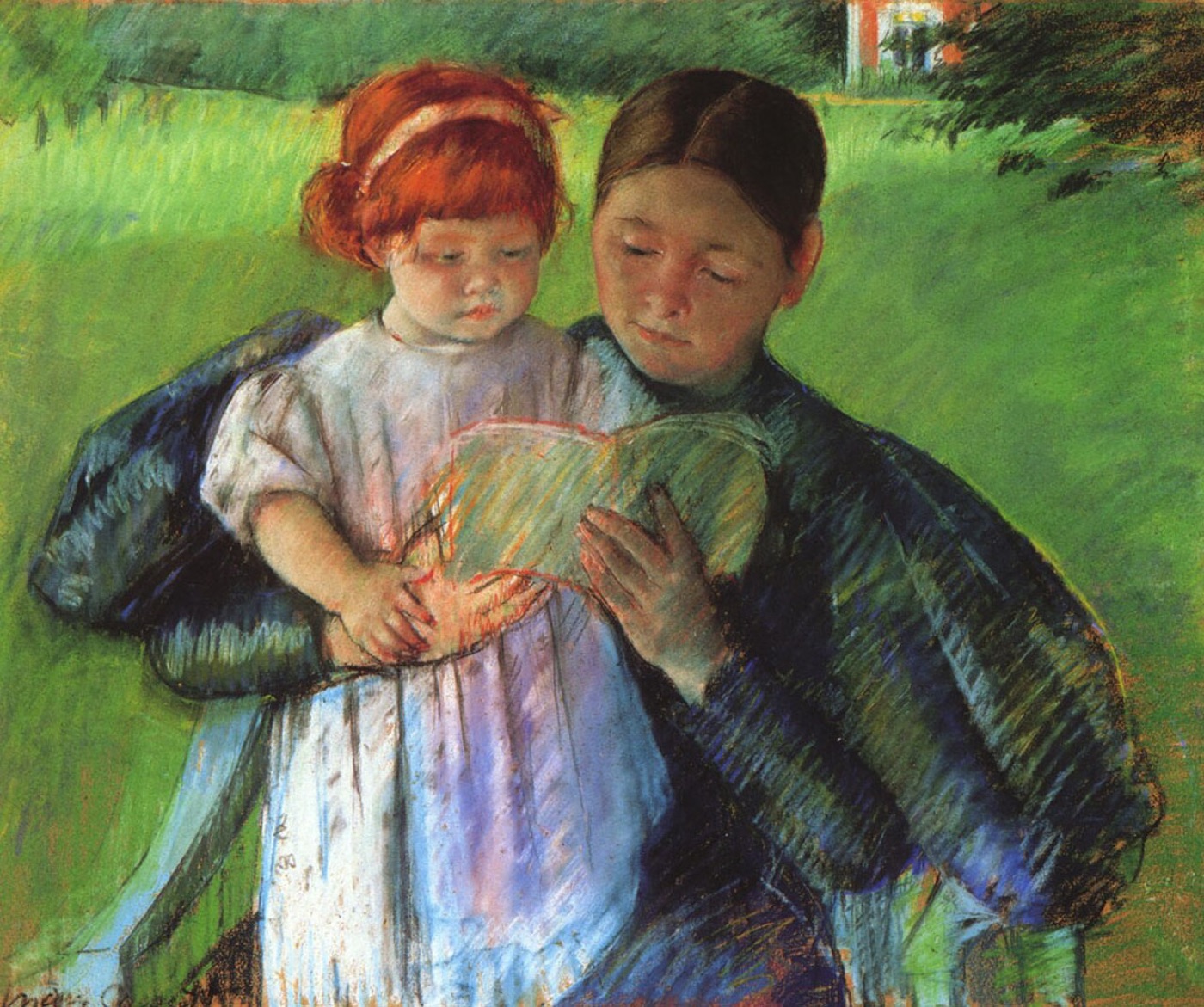
Mary Cassatt painted this nurse and her small charge in 1895. The picture she caught is the same picture a parent sees at bedtime, and the same one a first-grade teacher sees on a Tuesday morning. Words becoming worlds.
The tools have changed. The tablets have not. At NOCA, a child's first years of school should feel like this — warm, quiet, shared, and held in the company of an adult who has read the book and loves it.
Kindergarten through Grade 6
What follows is a representative sequence. Particular titles and math milestones vary slightly year to year; a classical K–12 scope and sequence is the spine.
Letters, sounds, and the love of a good story.
A few books they'll meet
In the classroom
Fluency. Short poems by heart. Math that sticks.
A few books they'll meet
In the classroom
Independent reading takes off.
A few books they'll meet
In the classroom
The ancient world enters the story.
A few books they'll meet
In the classroom
Medieval imagination, American grit.
A few books they'll meet
In the classroom
Longer arcs. More demanding sentences.
A few books they'll meet
In the classroom
Into the ancient classics.
A few books they'll meet
In the classroom
The next step
The best way to feel the difference is to stand in the back of a third-grade reading lesson for twenty minutes. Come see it. Stay as long as you like. Ask anything.